Restoring a single historic building can cost millions. Traditionally, that money comes from a short list of sources: governments, a few wealthy patrons, or a developer who expects to recover the investment many times over. Everyone else, the people who actually love the place, can only watch.
Tokenization promises to change who gets to take part.
What tokenization actually means
To tokenize an asset is to represent rights in it, such as a share of ownership, a share of income or a membership right, as digital tokens on a blockchain. Those tokens can be divided into small units, held by many people, and transferred under clear, programmable rules.
Capital comes after attention, creativity and participation, never before.
The idea has moved from experiment to mainstream finance. According to DeFiLlama data reported by Cointelegraph, the value of tokenized real-world assets (RWA) on public blockchains reached about $23.6 billion in March 2026, up roughly 66% from the start of the year. Most of that is government bonds and funds, but real estate, private credit and commodities are growing fast.
Why culture is a natural fit
Cultural and heritage projects have three features that make tokenization interesting:
- Many people care, few can pay a lot. A building may have ten thousand admirers worldwide. Small, accessible participation turns admiration into support.
- Value is more than money. Participants may want access, recognition, voting rights on programming or a share of future income. Tokens can encode several kinds of rights at once.
- Transparency builds trust. Public records of how money was raised and spent answer the oldest question in fundraising: where did my contribution go?
How it could work for a forgotten building
Imagine a disused silo entering the Love Creators game. Creators propose its future; the public chooses a vision: a museum of light with a public plaza. Now the vision needs capital.
Alongside patrons and institutional partners, a tokenized structure could let thousands of people take part, for example:
- a supporter token: recognition, early access and a voice in the cultural programme;
- a participation token: a defined share of income from tickets, rentals or events, where regulation allows;
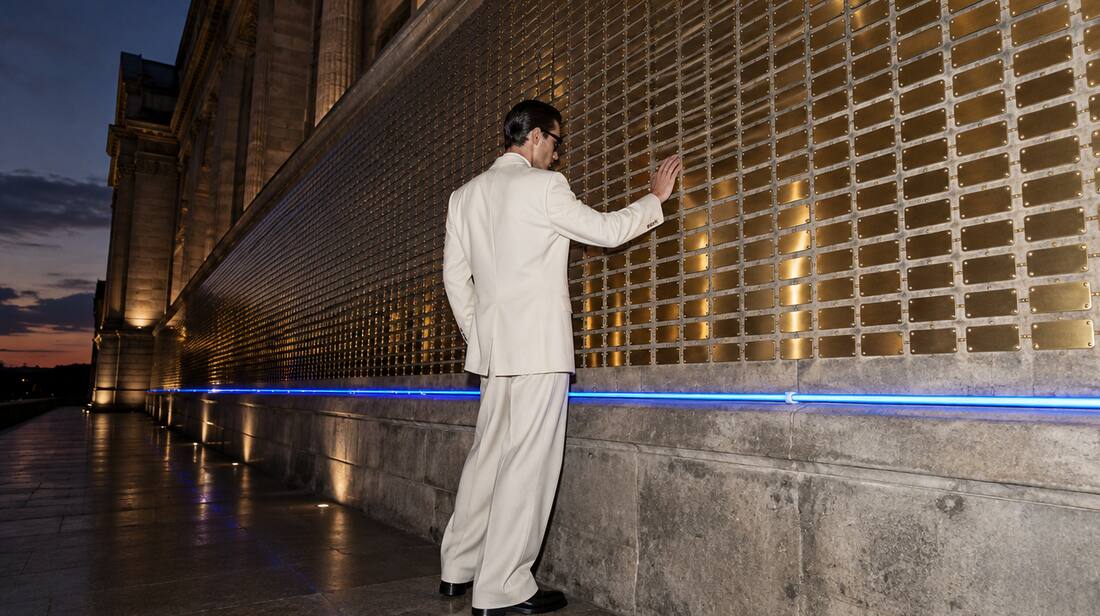
- a founder wall: every contributor's name inscribed in the finished building, physical proof of a digital act.
The global show creates the attention; tokenization gives that attention a way to become ownership and responsibility.
What to watch out for
Tokenization is a tool, not a miracle, and anyone considering it should be clear about the risks:
- Regulation. In most countries, tokens that promise financial returns are securities and must follow securities law. Structures must be designed with legal advisers in each jurisdiction.
- Liquidity is not guaranteed. A token can be transferable in theory and hard to sell in practice.
- The building still has to work. A token is only as good as the place behind it: its programme, management and maintenance.
- Community first. Financial participation must never crowd out the people who live around the place.
This article is for information only and is not investment advice.
Our view
We are interested in tokenization for one reason: it can widen the circle of people who own the future of a place. If ten thousand people around the world help restore a building, they will visit it, defend it and tell its story. That is worth more than any single cheque.
Capital is stage six of our game. It comes after attention, creativity and participation, never before.
Next in the journal: cultural crowdfunding, from the Statue of Liberty's pedestal to today's civic platforms.